Cone Beam CT Scan
Burlington, MA
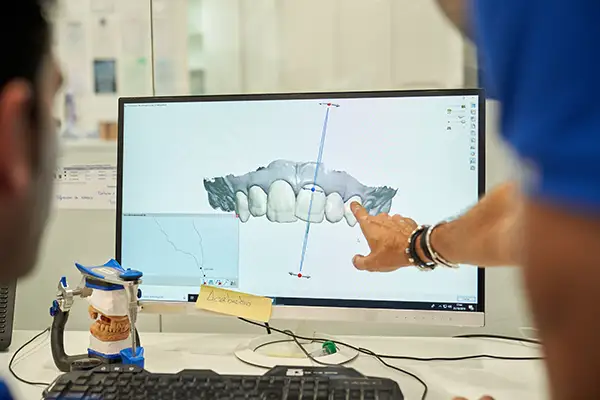 An injury to the mouth or face can be disorienting, and the true extent of the damage is not always visible on the surface. A chipped tooth might be the most obvious sign of trauma, while fractures deeper within the root, jawbone, or surrounding structures remain hidden from view. At Dental Care of Burlington, we use cone beam CT (CBCT) imaging to evaluate trauma cases thoroughly, giving our team the detailed information needed to diagnose the full scope of an injury and plan treatment accordingly. An injury to the mouth or face can be disorienting, and the true extent of the damage is not always visible on the surface. A chipped tooth might be the most obvious sign of trauma, while fractures deeper within the root, jawbone, or surrounding structures remain hidden from view. At Dental Care of Burlington, we use cone beam CT (CBCT) imaging to evaluate trauma cases thoroughly, giving our team the detailed information needed to diagnose the full scope of an injury and plan treatment accordingly.
Why Trauma Cases Call for Detailed Imaging
Dental and facial trauma can involve far more than a visible chip or crack. A tooth that appears only cosmetically damaged may have a root fracture that is not apparent without imaging, and the surrounding bone may have sustained damage that affects how the tooth heals or how future treatment should proceed. Traditional two-dimensional X-rays can miss these findings, particularly fractures that run in a direction not well captured by a flat image, or fractures located in areas where overlapping anatomy obscures the view.
Cone beam CT addresses this limitation directly. By capturing the injured area in three dimensions, our team can examine a tooth, its root, and the surrounding bone from any angle, identifying fractures, displacement, and bone involvement that might otherwise go undetected until symptoms develop later.
Assessing Root and Bone Fractures
Root fractures are notoriously difficult to diagnose without three-dimensional imaging, particularly when they occur below the gumline or run vertically along the root. A tooth with a hidden root fracture may appear stable initially, only to develop pain, mobility, or infection weeks or months later. CBCT allows our team to identify these fractures early, which directly influences treatment decisions about whether a tooth can be saved, whether root canal treatment is likely to succeed, or whether extraction offers a more predictable outcome.
The same imaging also reveals fractures within the surrounding bone itself, information that is essential when trauma has affected the jaw beyond the teeth. Understanding the extent of bone involvement helps determine whether stabilization, splinting, or referral for more specialized care is the appropriate next step.
Evaluating Tooth Displacement and Position
Trauma can shift a tooth from its original position, sometimes subtly enough that the displacement is not obvious on visual exam alone. Cone beam CT allows our team to measure the exact position of an injured tooth relative to its socket and neighboring structures, which is particularly important when a tooth has been partially dislodged or pushed into the bone.
This precise measurement informs decisions about repositioning and stabilization, helping our team determine the safest and most effective way to guide the tooth back into proper alignment while minimizing further stress on the root and surrounding bone.
Supporting Treatment Planning for Complex Injuries
More severe facial trauma, involving multiple teeth, significant bone displacement, or injury extending into the jaw joint, requires an especially thorough diagnostic picture. CBCT gives our team a complete three-dimensional view of the injury, supporting decisions about whether treatment can be managed within our practice or whether referral for specialized surgical care is warranted.
In these more complex cases, detailed imaging also plays an important role in documenting the initial extent of the injury, which can be valuable for tracking healing progress over subsequent visits and confirming that treatment is proceeding as expected.
Monitoring Healing After Trauma
Follow-up imaging is often part of trauma care, particularly for injuries involving root fractures or significant bone involvement. A cone beam scan taken during a follow-up visit can be compared to the original imaging to assess whether healing is progressing normally, whether any signs of infection or root resorption have developed, and whether additional treatment is needed.
This objective comparison gives both our team and the patient confidence in how recovery is progressing, rather than relying solely on symptoms, which do not always correlate with the underlying healing process.
Why Timing Matters
The value of thorough imaging is highest when it happens soon after an injury occurs. Some findings, such as early signs of root fracture or subtle bone displacement, are easier to identify clearly before healing begins to alter the surrounding tissue. Waiting to seek evaluation can make certain findings harder to interpret and may narrow the range of treatment options available, particularly for injuries involving tooth displacement, where prompt repositioning tends to produce better long-term outcomes than delayed treatment.
This is one of the reasons our team encourages patients to seek evaluation as soon as possible after any dental or facial injury, even when the visible damage seems minor. A tooth that looks only cosmetically affected can still have sustained a root fracture or sustained damage to its supporting bone, and imaging is often the only reliable way to know for certain, well before any pain, mobility, or discoloration would otherwise alert a patient to a deeper problem.
Prompt, Thorough Care After an Injury
Dental and facial trauma should always be evaluated promptly, and thorough imaging is a key part of ensuring nothing is missed in that evaluation. Cone beam CT gives Dental Care of Burlington the diagnostic clarity needed to assess the full extent of an injury, plan appropriate treatment, and monitor healing with confidence over time.
Working With Emergency and Specialist Care
In cases involving more significant facial trauma, our team may coordinate closely with emergency medical providers or specialists such as oral and maxillofacial surgeons. When this coordination is needed, the CBCT imaging obtained at our practice can be shared directly, giving every provider involved the same detailed anatomical picture and helping ensure that care decisions across different providers are consistent, well informed, and free of the delays that can come from repeating imaging at each stage of referral.
If you or a family member has experienced a dental or facial injury, prompt evaluation matters. Call 781-362-2260 to reach Dental Care of Burlington as soon as possible after an injury so our team can assess the situation thoroughly and guide you through the appropriate next steps. |